
The meeting will review the current global and domestic economic situation and financial stability issues, including those concerning banking and NBFCs.
S&P has maintained a stable outlook on the basis of their expectation that over the next two years the growth will remain strong and India will maintain its sound net external position and fiscal deficit will remain elevated but broadly in line with their forecast.

PSBs have been requested to reach out to MSMEs to provide bill discounting to them against their dues since they suffer the most from shortage of cash.
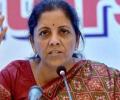
The finance ministry is working on a second relief package for the Indian economy hit hard by the coronavirus outbreak and the 21-day nationwide lockdown imposed to curb the contagion, sources said. Last month, the government announced a Rs 1.70 lakh crore relief package in the form of foodgrains and cash transfers for the poor and vulnerable section of the society to help them deal with the hardships caused by the lockdown. Now, the government is working on a stimulus to be given to hard-hit sectors of the economy after the lockdown is lifted, sources said, adding that an announcement is expected in the next few days depending on the severity of the pandemic.

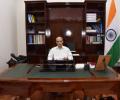
Tuesday's meeting at the PM's residence, attended by all the five secretaries in the finance ministry besides top officials of other economic ministries and NITI Aayog, cleared a five-year vision plan for the government to make India a $5-trillion economy by 2024.

The airline's 100 per cent shareholding in profit-making budget carrier Air India Express as well as 50 per cent shareholding in equal joint venture Air India SATS Airport Services would also be sold.

'If we want faster growth and want greater flow of credit towards the private sector, it's important to have many more of such large entities.'
The finance minister is ready to present a second financial package. The Centre has ruled out a mega stimulus and will rely on targeted, incremental packages. Industry is clamouring for a bailout, the liquidity upheaval in capital markets is nowhere close to being sorted out, and all budgetary forecasts now stand irrelevant, reports Arup Roychoudhury.
The appointments committee of the Cabinet headed by Prime Minister Narendra Modi cleared Bhalla's appointment as OSD in the ministry with immediate effect.
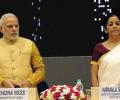
Prime Minister Narendra Modi on Thursday reviewed the impact of Covid-19 on the Indian economy and a possible second stimulus to boost sectors hit hard by the pandemic. Modi held discussions with Finance Minister Nirmala Sitharaman as the pandemic hit sectors from small industries to the aviation sector hard with millions of jobs at stake.
Owing to Finance Minister Nirmala Sitharaman being new to her role, a number of crucial announcements in the Budget bore Garg's imprint, especially the decision to borrow in overseas markets, reduce the fiscal deficit as a percentage of gross domestic product, and resort to off-Budget borrowing to meet that target, says Arup Roychoudury.
Finance Minister Nirmala Sitharaman will present her second Budget a little more than a month from now. Like any other FM, Sitharaman will depend on her team of bureaucrats and advisors to frame and present the Budget.
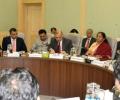
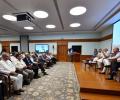
At a pre-Budget meeting, the FM was asked to ensure that NBFCs come out of the liquidity crisis they are facing with the help of RBI. They also spoke about the futility of trying to achieve a 3 per cent fiscal deficit target over the medium term.
The appointment of new expenditure secretary comes a month-and-a-half ahead of the Budget for 2020-21 to be presented on February 1.

The panel is expected to suggest various relief measures to put economy back on track as soon as possible, the sources said.
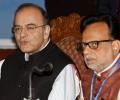
Finance Secretary Hasmukh Adhia vacates his post on November 30 and Expenditure Secretary Ajay Narayan Jha, the second seniormost bureaucrat in the finance ministry, retires on January 31, the day before Jaitley presents the 2019-20 interim budget.

The 21st meeting of FSDC comes against the backdrop of the economy hitting a six-year low growth rate of 5 per cent in the first quarter of 2019-20. Even some of the macroeconomic data for the second quarter does not portray an encouraging picture of the economy.

Since December 2018, monetary policy has been eased substantially by RBI with policy rates being cut by 75 bps and policy outlook being changed to 'accommodative'.

As the government plans to take sector-specific steps to tackle the slump, Finance minister Nirmala Sitharaman will soon hold talks with representatives from various sectors to get and take steps so that the confidence of those sectors can be restored.

Concerned by GDP slowdown and unrealistic tax targets, the economists urged Finance Minister Nirmala Sitharaman to implement long-term structural steps like land and labour reforms. Warning against any off-Budget financing the economists said the government should prepare a statement of intent for its social, rural and welfare sector expenditure.
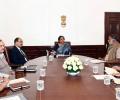
While the meetings on Friday were preliminary discussions, it is learnt that sectors like tourism; hospitality; aviation; micro, small and medium enterprises (MSMEs); and livestock have sought deferring loan repayments and temporary tax holidays in specific cases to help them tide over the steep fall in economic activity.
The additional cash will now give the Centre more headroom for stimulating the economy.

NSO has pegged economic growth at 5 per cent in 2019-20 in its second advance estimates.

A 15 per cent corporate tax rate for services companies in SEZs, setting up a fund for deep-tech startups and establishing clusters to demonstrate design-to-manufacturing capabilities of tech firms were some of the key demands made by the IT sector at the pre-Budget consultation on Monday. The participants shared their views and suggestions regarding Big Data, incentives for encouraging setting up of data centres, fiscal incentives for data localisation, incentives for pushing digital penetration in rural areas, and corporate guarantee to startups for competing with other nations.
